


 ICSI Treatment in Bhubaneswar
 Providing Skillful ICSI Facility in severe male factor issue
Intracytoplasmic Sperm Injection (ICSI) helps severe male factor infertility by directly injecting a single, specially selected sperm into a mature egg, bypassing natural fertilization barriers. It enables biological parenthood for men with extremely low sperm counts, poor motility, or abnormal morphology, achieving 50–80% fertilization rates.
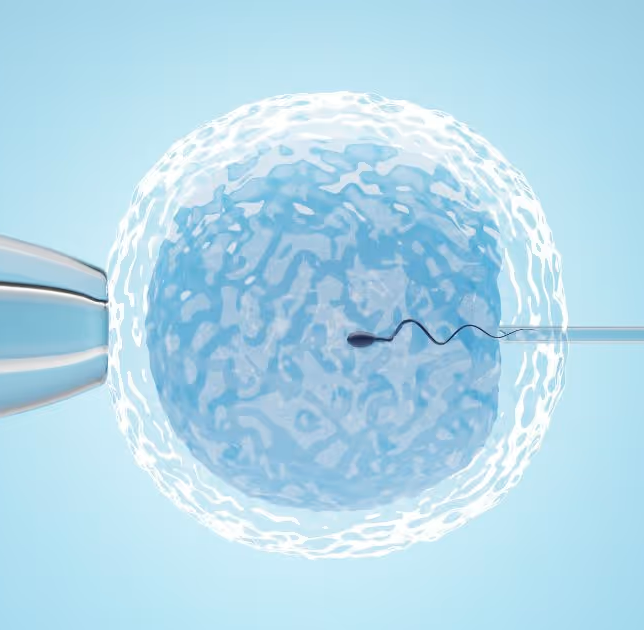
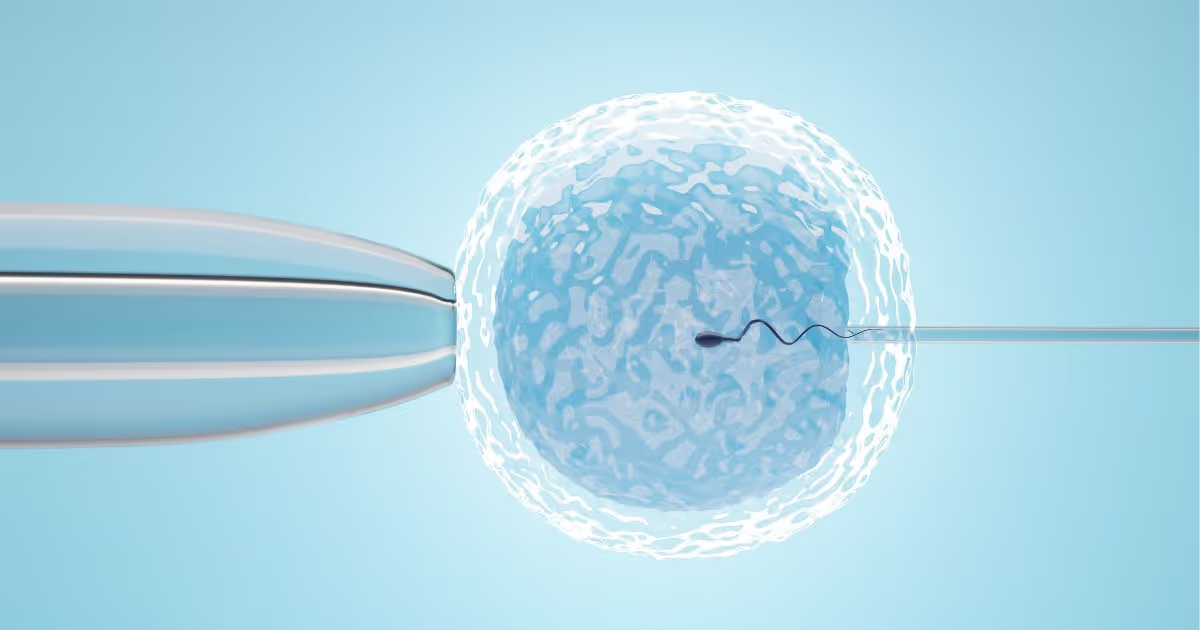
Intra-Cytoplasmic Sperm Injection, is the injection of a single live sperm into an egg instead of natural sperm penetration. It is a form of IVF recommended for male-factor infertility treatment.
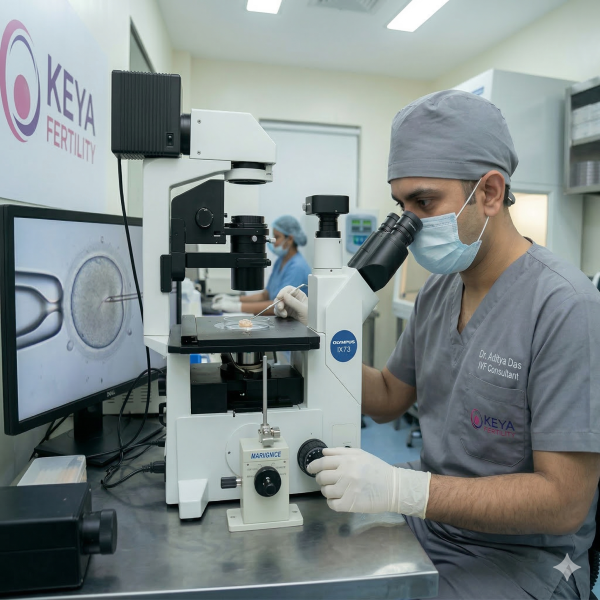
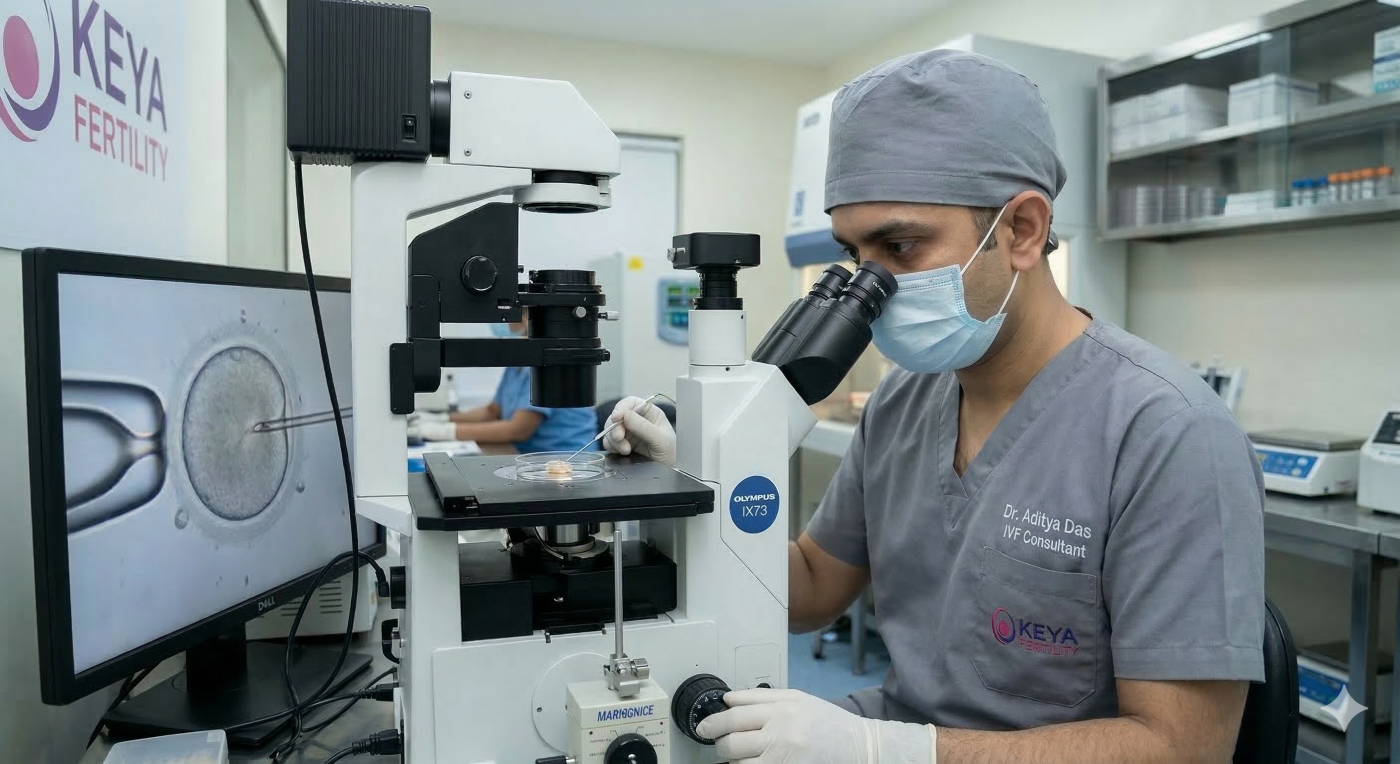
IVF occurs via natural sperm penetration, whereas, for ICSI, sperm is picked up by a tiny glass needle and meticulously injected into an egg by an embryologist under a microscope.
ICSI is a treatment for severe male-factor infertility like
- very low sperm count.
- not sufficiently motile.
- surgical sperm retrieval from the epididymis or testicles(TESA,PESA,micro TESE)
- anti-sperm antibody in the female .
ICSI is often recommended to those who use frozen eggs or sperm, eggs from women aged over 35 years old, or those who have had unsuccessful fertilization with conventional IVF techniques. Successful fertilization rate in ICSI is about 50%-80%

 Does ICSI guarantee pregnancy?
 ICSI facilitates effective fertilization, success rates of 50–80% /cycle.
However, the success rate for a live birth depends heavily on factors like age of female partner , egg/sperm quality, experience of the clinicians & embryologist team .
 Key Indicators for ICSI
 Commonly done for Severe Male Factor Infertility
18+
Years of experience
Key Indicators for ICSI
 Oligozoospermia
- Asthenozoospermia
- Teratozoospermia
- Azoospermia
- Use of frozen gametes
- Anejaculation
- Retrograde Ejaculation
- Recurrent IVF Failure
- Unexplained Infertility
- Low Egg Quality/number
 About Us